
There are plenty of sights and attractions to visit in Denmark’s capital, Copenhagen. Among them are Carlsberg Byen, Freetown Christiania, Tivoli, Rådhuspladsen, Nyhavn, The Opera House, Amalienborg Slot, Anglican Church of St. Alban, Kastellet, and the statue of The Little Mermaid. For this entry, I’m covering three more places you could add to your itinerary when getting to know Copenhagen.
First stop: Strøget (Walking Street) and the Rundetaarn (The Round Tower)
The Walking Street is one of the oldest and longest shopping streets in Europe at 1.1 kms (visitcopenhagen.com). It is car-free, and during summer, throngs of people can be seen scattered along the area. The Danes seemed to love sunbathing in the middle of the plaza, or in any place where there’s a bench or two.
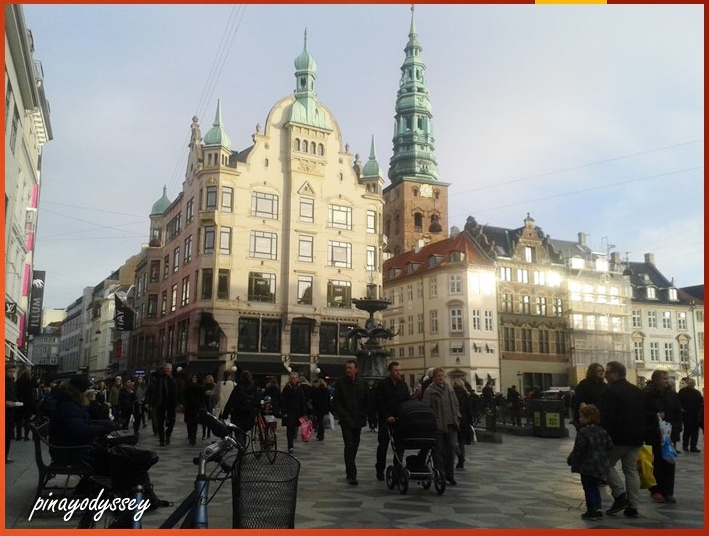
According to sources, Strøget was founded in 1962. Here, visitors can enjoy a line of shops (including famous brands), restaurants and landmarks. It was one of our favorite hangout spots in Copenhagen, not only for window-shopping, but also for getting a glimpse of street performances. Just imagine sitting on a bench at Amagertorv (photo below) listening to a talented man play the piano and watching passersby from all parts of the globe.


Somewhere along the Walking Street stands a popular structure in Denmark: the Round Tower. Built between 1637 and 1642 by Christian IV, the tower is a unique building without an elevator. Visitors can only climb up using the 209 meter long Spiral Walk. The Tower also houses an old library with approximately 10,000 books, a bell loft for the Church of the Trinity, and a Planetarium. To make it short, the Round Tower is the oldest functioning astronomy observatory in Europe which offers a magnificent panorama view of Copenhagen. (visitcopenhagen.com)
Climbing up was no joke. We paused a few times to catch our breath and enjoy the views through the windows.

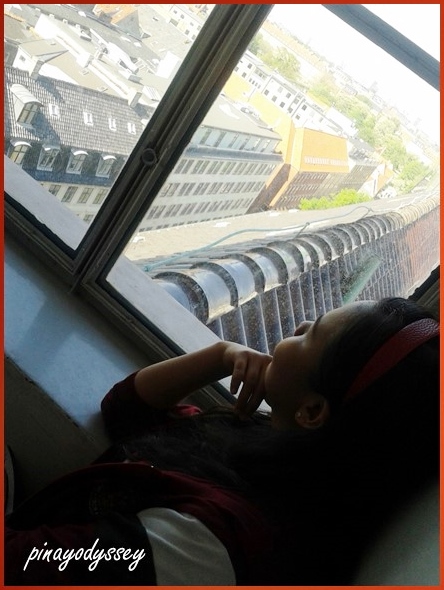
The view on top was astounding! Unfortunately, my camera was not. So pardon..
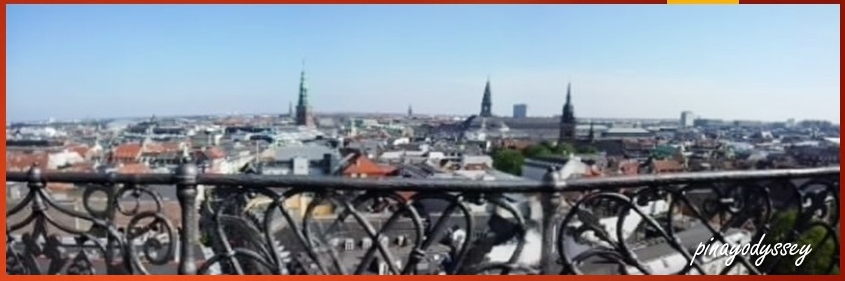
On our way down, we stopped by the library hall, some exhibitions, a floating glass floor, and the souvenir shops.

Entrance fee in 2013 is 25DKK for adults and 5DKK for children (5-15 y/o). For more info: https://www.rundetaarn.dk/en/visit-us/#tickets_prices.
Second stop: Rosenborg Slot (Rosenborg Castle)
Not far from the Rundetaarn is another building project of Christian IV, the Rosenborg Castle.

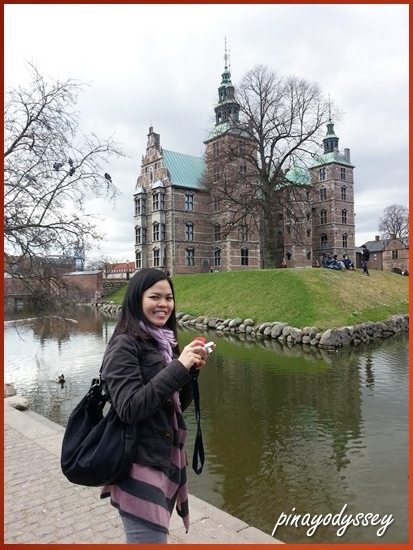
The castle follows the Dutch Renaissance style, and was finished in 1624. Christian IV named his “House in the Garden” the Rosenborg Castle. According to sources, the castle was a Royal Residence until 1710, when Frederik IV made it the setting for the Royal collections.
I loved this Castle and its beautiful garden in summer. Everyone is free to spend some quiet moments in the garden, read a book, have a picnic, take a nap, etc. My friends and I were just strolling around the city, so we did not stop and see what’s inside the castle. But if you plan to explore Rosenborg and its Museum: http://dkks.dk/visit-us/. The lions at the gate are waiting for you.
Third stop: Copenhagen Botanical Garden
A couple of blocks away from Rosenborg is the University of Copenhagen Botanical Garden and Museum, simply known as the Copenhagen Botanical Garden. It is part of the University’s Natural History Museum of Denmark.
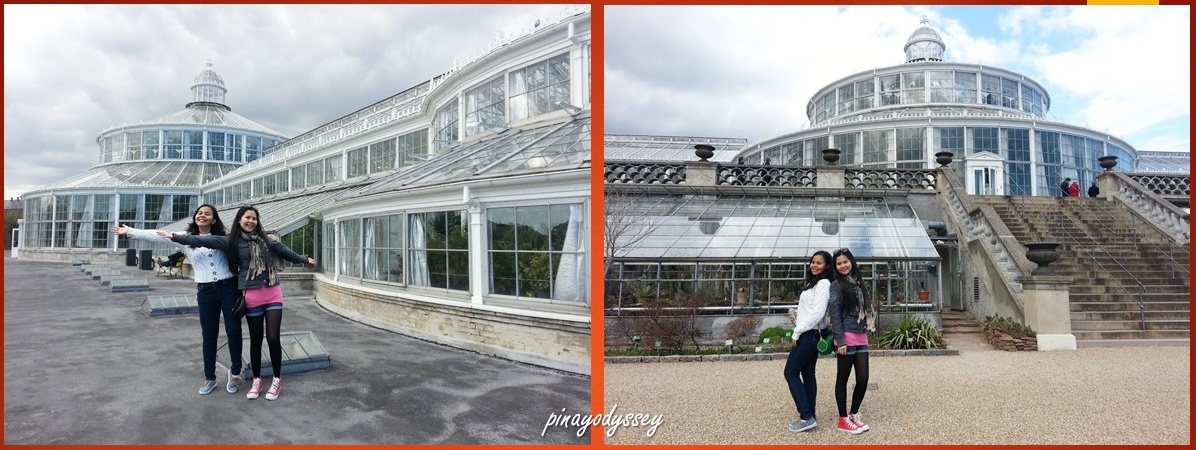
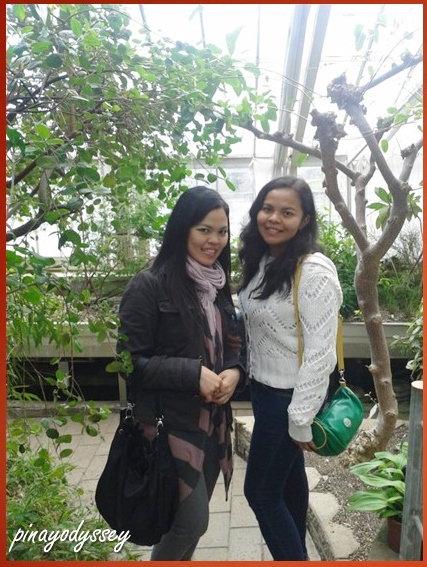
In the garden, visitors can enjoy the largest collection of living plants. It also houses three gene banks. In 2013, it was free to visit the garden. (https://snm.ku.dk/botanisk-have/) I loved the huge greenhouse, which smelled like tropical Philippines.
There you have it, a 1-day itinerary for a lovely walking tour in Copenhagen. ❤ 🙂 ALL PHOTOS AND VIDEOS ON THIS BLOG ARE MINE. 🙂 #spreadloveandpositivevibes



 PinayOdyssey
Leave a comment